Guide
Trucking construction materials: flatbed vs tipper vs trailer
Loose materials such as sand, gravel and fill move on a tipper, which unloads by tipping the bed; packaged and rigid materials such as steel, blocks and cement bags move on a flatbed truck or trailer, which is loaded and unloaded by forklift or crane. The right choice depends on how the material is packaged and how the site can receive it, not just its weight.
The wrong truck on a construction site costs more than the delivery fee — a tipper cannot unload steel, and a flatbed cannot dump sand. This guide covers choosing between a flatbed, tipper and trailer for common site materials, and planning deliveries so the truck matches what the site can actually receive.
Match the truck to how the material is handled, not just its weight
The deciding factor is not just tonnage — it’s whether the material is loose or packaged, and how it leaves the truck.
| Material | Truck type | Why |
|---|---|---|
| Steel bars, beams | Flatbed truck or trailer | Rigid, lifted by crane or forklift |
| Concrete blocks, bricks | Flatbed truck or trailer | Palletized, forklift-loaded |
| Cement bags | Flatbed truck or trailer | Palletized or stacked, needs cover from rain |
| Sand, gravel, fill | Tipper | Loose material, unloaded by tipping |
| Prefabricated panels | Flatbed trailer | Long, rigid, crane-loaded |
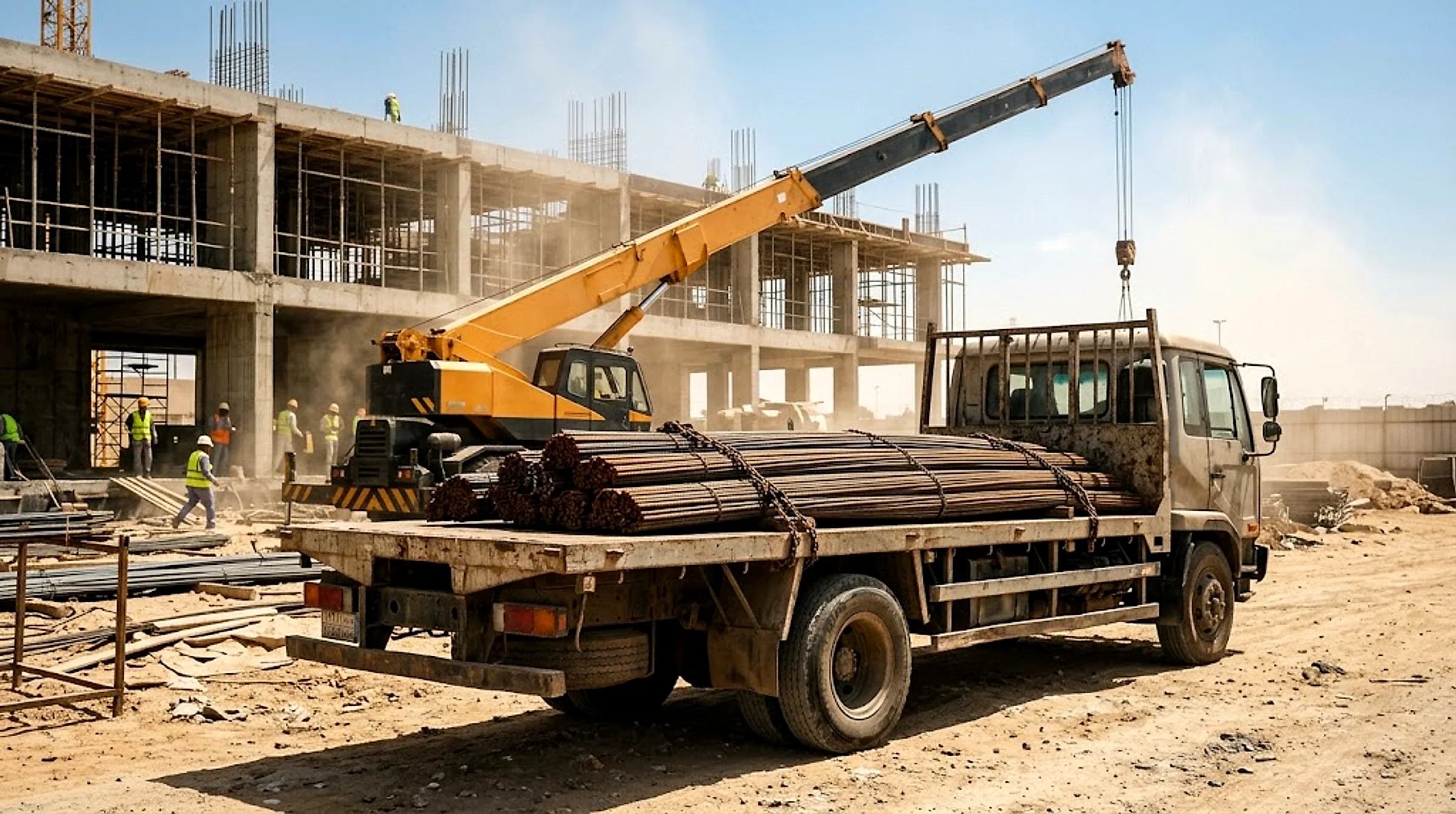
A tipper is built to dump loose material at the drop point and cannot be used for anything that needs to stay stacked or upright. A flatbed truck or trailer is built for the opposite: material loaded and secured by forklift or crane, unloaded the same way.
Flatbed truck or flatbed trailer: match the deck to the load
For smaller loads or sites with tight gate access, a flatbed truck (up to about 12 t on an 8.5 m deck) manoeuvres more easily than a full trailer. For a full load moving between cities or a large delivery to a site with room to receive it, a flatbed trailer (up to about 28 t on a 13.6 m deck) is the more economical choice per tonne moved.
Site access: check before the truck is booked
A truck that cannot enter the site or turn once inside means a delayed delivery and a driver waiting on a public road. Before booking, confirm:
- Gate width and height against the truck or trailer combination you’re booking.
- Turning space inside the site for the truck to reposition and leave.
- Ground conditions — a loaded truck on soft or recently graded ground can get stuck.
- Unloading method — forklift, crane, or tipping — matched to what the site actually has on hand.
- A site contact who can direct the driver to the exact drop point.
Loading and unloading on site
Packaged materials — steel, blocks, cement — are lifted on and off by forklift or crane, so the site needs that equipment ready and an operator available when the truck arrives, not after. Loose materials on a tipper unload without site equipment, but need a clear, firm drop area the truck can back into and tip safely. Either way, a truck idling because the unloading crew or equipment isn’t ready is a cost the site pays, not just a delay.
Planning deliveries to keep the site moving
Construction schedules run on sequenced deliveries — steel before the pour, blocks before the wall crew starts, sand before the concrete batch. Book each delivery against the stage of work that needs it, not all at once, and confirm the site can actually receive and store the material on the day it arrives. A delivery that arrives before the site is ready ties up yard space; one that arrives late stalls the crew waiting on it.
Book your materials delivery at an upfront price
In the Mirabk app you choose a flatbed, tipper or trailer, set your site’s pickup and drop-off points, and see one upfront price before you book — no negotiation on-site. A verified driver accepts the load, you track it on the map, and your site contact confirms delivery with a code.
Frequently asked questions
Should steel and blocks go on a flatbed or a tipper?
Steel, blocks and cement bags go on a flatbed truck or trailer, loaded and unloaded with a forklift or crane. A tipper is for loose material that unloads by tipping, such as sand or gravel, and is not suited to stacked or palletized goods.
What truck carries sand and gravel to a site?
A tipper, which carries loose fill, sand or gravel and unloads it directly at the drop point by tipping the bed, avoiding manual unloading.
Do I need a flatbed truck or a full trailer for building materials?
A flatbed truck (up to about 12 t on an 8.5 m deck) suits smaller loads and tighter site access. A flatbed trailer (up to about 28 t on a 13.6 m deck) suits full loads on sites with room for a longer combination to manoeuvre.
What should I check about site access before booking a delivery?
Confirm the gate width and turning space for the truck size you're booking, ground conditions for a loaded truck, and whether unloading is by forklift, crane or tipping, so the truck that arrives matches what the site can actually receive.