Trucks
Tipper Truck (Qallab): Definition, Payload and When to Use It
A tipper is a rigid truck with a hydraulically tilting bed that empties the load at the delivery point with no manual unloading, rated up to about 30 tonnes on a 9 m bed. It's used specifically for bulk materials such as sand, gravel and fill, and doesn't suit packaged goods or palletized cargo.
The difference between a tipper and every other truck isn’t payload — it’s how it unloads: a tipper tilts its bed to empty the material, while every other truck needs a crane or manual unloading. That difference decides exactly when to choose it.
What is a tipper?
A tipper is a rigid truck whose bed is mounted on a hydraulic mechanism that raises it from the rear, letting bulk material slide out of the bed under gravity on arrival at the delivery point. This design makes it the fastest to unload among all truck types, because it needs no lifting equipment or extra labor on site.
Tipper payload and length
| Spec | Value |
|---|---|
| Max payload | 30 t |
| Deck length | 9 m |
| Chassis type | Rigid truck (hydraulic tipping bed) |
| Unloading method | Bed tilts, no crane needed |
This high payload on a rigid truck (higher even than a standard trailer’s 28 t) is possible because fill and sand materials are relatively dense for their size, and the bed is structurally built to carry this concentrated weight.
When to choose a tipper
- Sand, gravel and fill. Bulk materials that empty by sliding out are the tipper’s core use.
- Excavation and fill work on construction sites. Where fast, repeated unloading is needed without waiting on lifting equipment.
- Sites with no forklift or crane ready. A tipper unloads itself, so it doesn’t depend on site equipment.
- Material that doesn’t need protection or organized stacking. Since tilt-unloading mixes the material, it doesn’t suit anything that must stay upright or neatly stacked.
Tipper vs flatbed and trailer
A flatbed and a trailer are built for the opposite of what a tipper does: loading and unloading by forklift or crane, suited to packaged or solid materials like steel, blocks and cement bags. A tipper doesn’t suit these materials because they need to stay upright or stacked in order, while tilt-unloading would mix them up. The choice between a tipper and a flatbed comes down to the material’s nature, not weight alone.
Book a tipper at an upfront price
In the Mirabk app, pick the tipper as your truck type for fill and sand, and set the pickup and drop-off points, and one upfront price appears before you book. A verified driver accepts the load, and you follow the truck on the map through to proof of delivery.
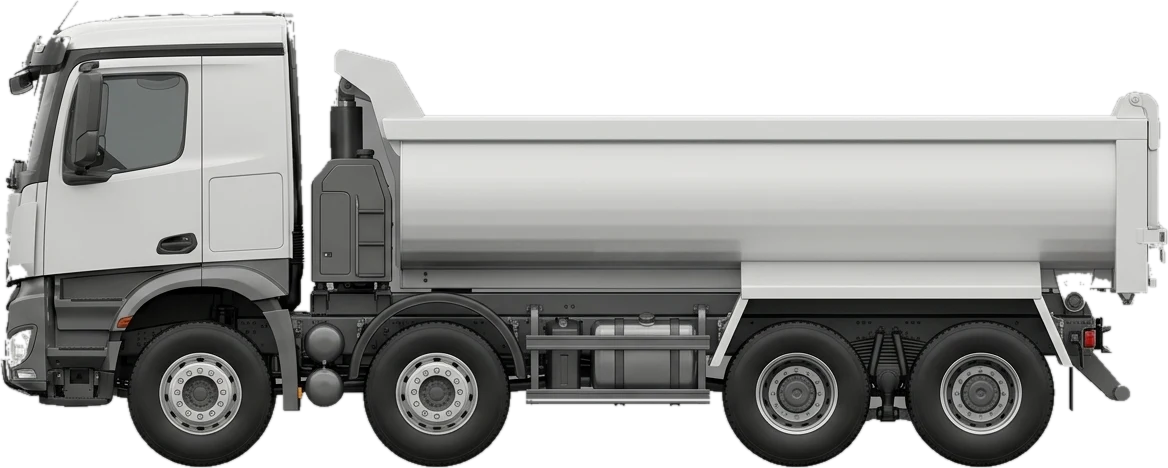 Tipper30 t · 9 mSee this truck
Frequently asked questions
What is a tipper's payload?
A tipper's maximum payload is about 30 tonnes on a 9 m bed, making it one of the highest-capacity rigid trucks thanks to a design built for dense bulk material.
How does a tipper empty its load?
The tipper's bed is hydraulically raised from the rear so bulk material slides out under gravity and empties directly at the delivery point, with no crane or manual unloading needed.
Does a tipper suit blocks or steel?
No. A tipper is built for bulk material that empties by sliding out, like sand, gravel and fill. Blocks, steel and cement bags need a flatbed or trailer loaded and unloaded by forklift or crane.
When do I need a tipper instead of a flatbed on a construction site?
When the material is bulk and needs fast unloading with no lifting equipment on site, such as sand or gravel for fill or concrete work. If the material is stacked or palletized, a flatbed or trailer is the right choice instead.